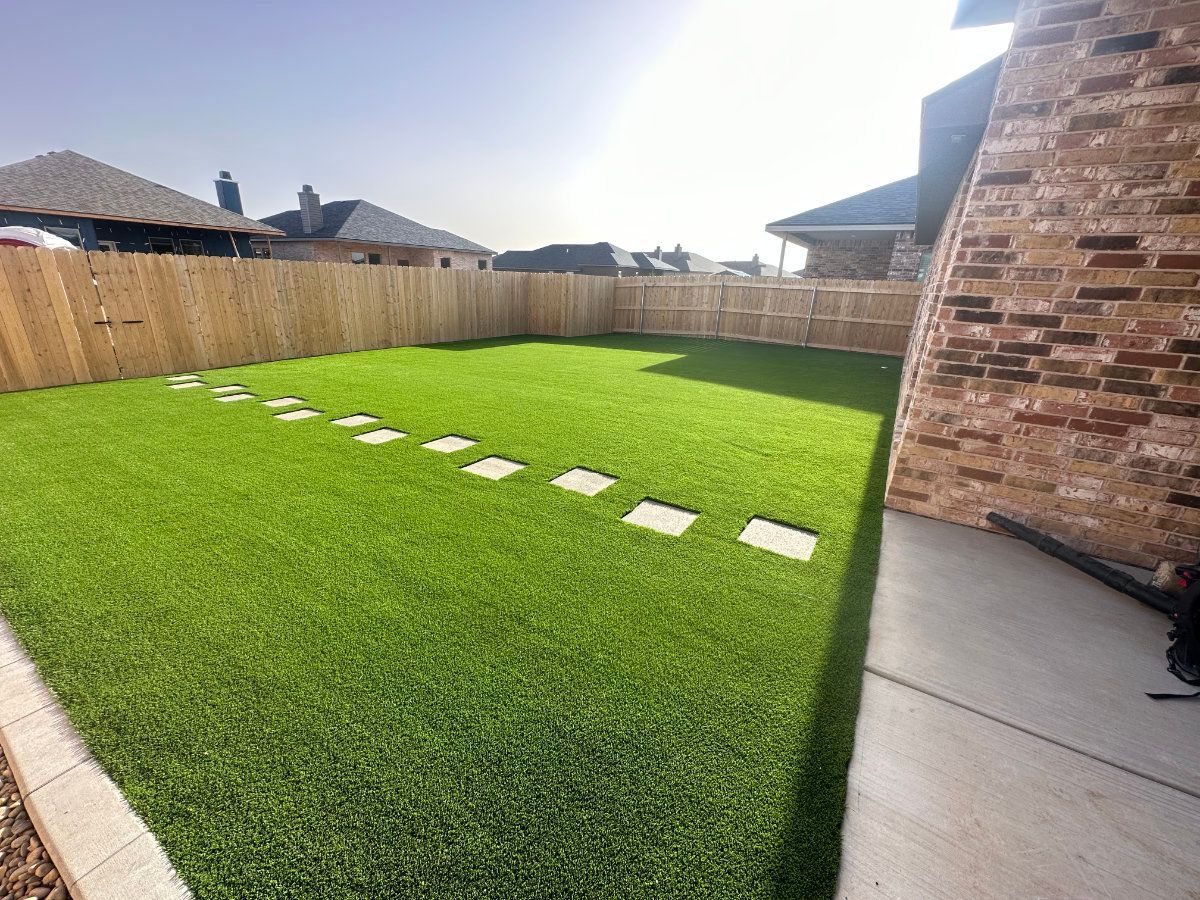
Over a ten-year period, artificial turf typically costs less than maintaining natural grass because you eliminate irrigation, mowing, and chemical treatments while extending the life of your landscaping investment. When you evaluate landscaping near me, calculating the total cost of ownership reveals that synthetic turf delivers predictable, low-maintenance savings year after year.
What Ongoing Expenses Disappear After Installing Artificial Turf?
You stop paying for weekly mowing services, seasonal fertilizer applications, irrigation system repairs, and water bills tied to lawn watering.
Natural grass requires regular inputs to stay healthy, and those costs accumulate every month.
Artificial turf needs only occasional rinsing and debris removal, tasks your existing maintenance staff can handle in minutes.
You also avoid emergency expenses like sod replacement after droughts or pest infestations. This financial predictability simplifies budgeting and frees capital for other business priorities.
How Does Reduced Water Use Lower Your Utility Bills?
Eliminating lawn irrigation can cut your monthly water bill by hundreds or thousands of dollars, depending on the size of your turf and local rates.
In regions with tiered water pricing or drought surcharges, the savings multiply quickly. Businesses that rely on large outdoor areas see the most dramatic reductions.
You also comply with water restrictions without sacrificing curb appeal, which protects your brand image during dry spells. For additional ways to enhance your property with low-maintenance solutions, explore putting green installations that add value without increasing water consumption.
Can Artificial Turf Reduce Your Landscaping Labor Costs?
Synthetic turf requires no mowing, edging, or seasonal planting, allowing you to reassign groundskeeping hours to other facility needs or reduce contractor expenses.
Your team spends less time coordinating with lawn services and monitoring grass health. The time saved translates directly into lower labor costs or redeployed resources.
Properties with multiple turf areas benefit from economies of scale, since maintenance remains minimal regardless of square footage. Learn more about durable options with synthetic turf options designed for long-term cost efficiency.
When Does the Initial Investment in Artificial Turf Pay Off?
Most businesses recoup their turf installation cost within three to five years through accumulated savings on water, labor, and materials.
The payback period shortens in climates with high water costs or strict irrigation limits. Once you've recovered the upfront expense, every subsequent year represents pure savings compared to natural grass maintenance.
Your property value also increases because buyers and tenants appreciate low-maintenance landscaping that looks professional without ongoing effort.
Artificial turf delivers financial returns that compound over time while keeping your property attractive and functional. Compare the numbers and start saving by connecting with Texas Turf & Putt at 719-650-1285.