
We offer financing, learn more!
Walls That Hold Slopes and Redirect Water
Retaining Walls in Lubbock for properties with uneven terrain and drainage concerns
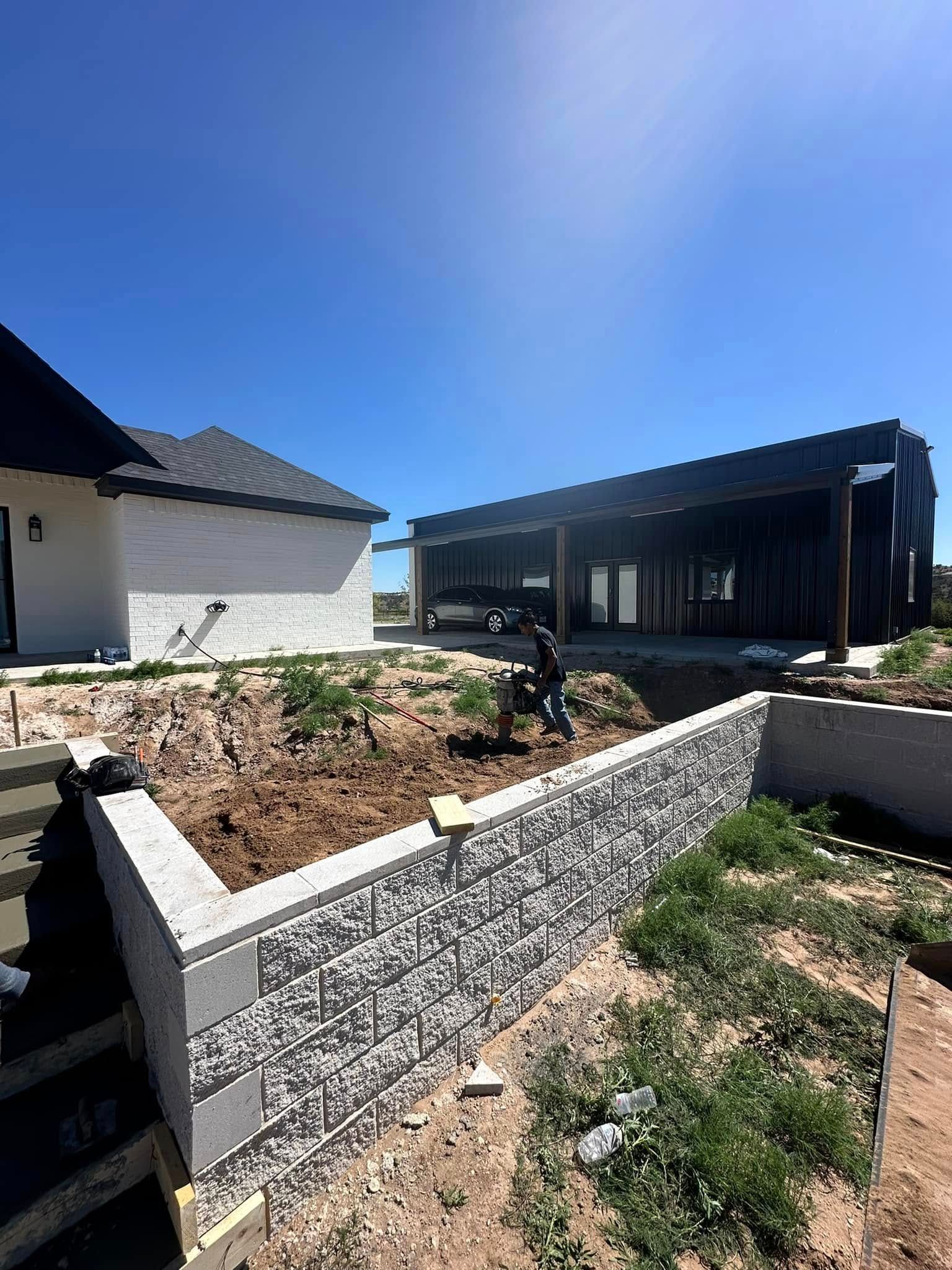
Stone retaining walls address both structural and water management problems on sloped properties. Texas Turf & Putt provides hardscaping services that include retaining wall construction in Lubbock, where wind erosion and sudden rain events can accelerate soil movement on grades. You see the difference in how water moves across your property and how much soil stays in place after heavy weather.
The work involves excavating to stable soil, setting a gravel base for drainage, and placing stone in courses that angle slightly back into the slope. Each stone locks into position through weight and setback rather than relying solely on mortar, which can crack under freeze-thaw cycles. Weep holes or drainage pipe behind the wall prevent hydrostatic pressure from building up and pushing the structure forward.
Schedule a property evaluation to identify specific grade and drainage concerns on your site.
What Proper Stone Retaining Walls Require
Stone selection affects both appearance and performance, with denser stones resisting weathering better than softer sedimentary types. The base extends below the frost line and wider than the wall height to distribute load, while backfill includes graded gravel that channels water to drainage outlets rather than trapping it behind the stone face.
After installation, you notice that slopes no longer slump after storms, planting beds remain level season to season, and water exits through designed channels instead of eroding soil around the property edges. Walkways and driveways near the wall stay intact because the structure removes the shifting ground that used to cause cracking and settling.
Walls above four feet typically require engineering calculations to confirm stability under soil load, and cap stones can be added to finish the top course and prevent water from entering joints. The installation timeline depends on wall length, height, and site access for equipment..
Common Questions About This Service
Property owners in Lubbock often ask about stone options, drainage methods, and long-term stability before committing to retaining wall projects.
What determines how deep the base needs to go?
The base depth depends on wall height and soil type, with taller walls requiring deeper footings that extend below the freeze line to prevent shifting during temperature swings common in Lubbock.
How does stone perform compared to block or timber?
Stone walls handle moisture and temperature changes without the rot or cracking issues that affect timber and some block materials, and the weight of natural stone provides inherent stability without requiring extensive reinforcement.
When should a retaining wall include drainage features?
Every retaining wall needs drainage, either through weep holes, gravel backfill, or perforated pipe, because water trapped behind the wall creates pressure that can cause the structure to lean or fail over time.
What maintenance does a stone retaining wall require?
You inspect joints annually for soil washout and check that drainage outlets remain clear, but stone itself requires no sealing or treatment and resists degradation from sun exposure and freeze-thaw cycles.
How is the wall anchored into a slope?
The wall is built in courses that step back into the slope, with each stone resting on a stable base and the backfill compacted in layers to lock the structure into the grade rather than sitting on top of it.
Texas Turf & Putt builds stone retaining walls that manage both soil retention and water movement on sloped properties. Request a site consultation to review your terrain and discuss stone options for your specific grade conditions.